

There’s a form of third-party validation that no marketing department can manufacture: the methods section of a peer-reviewed paper.
When a research team publishes in Nature Communications or the Journal of Power Sources, they document every piece of equipment they used: the make, the model, the operating parameters. They have to. Reproducibility requires it. Other labs need to replicate the work.
So we went looking for every one of those mentions. Not a curated highlight reel, but the complete findable research record. We searched three independent full-text scientific databases for any publication naming Sono-Tek equipment anywhere in its text (not just the title or abstract, which is almost never where an equipment citation lives), and we deduplicated the results into a single corpus.
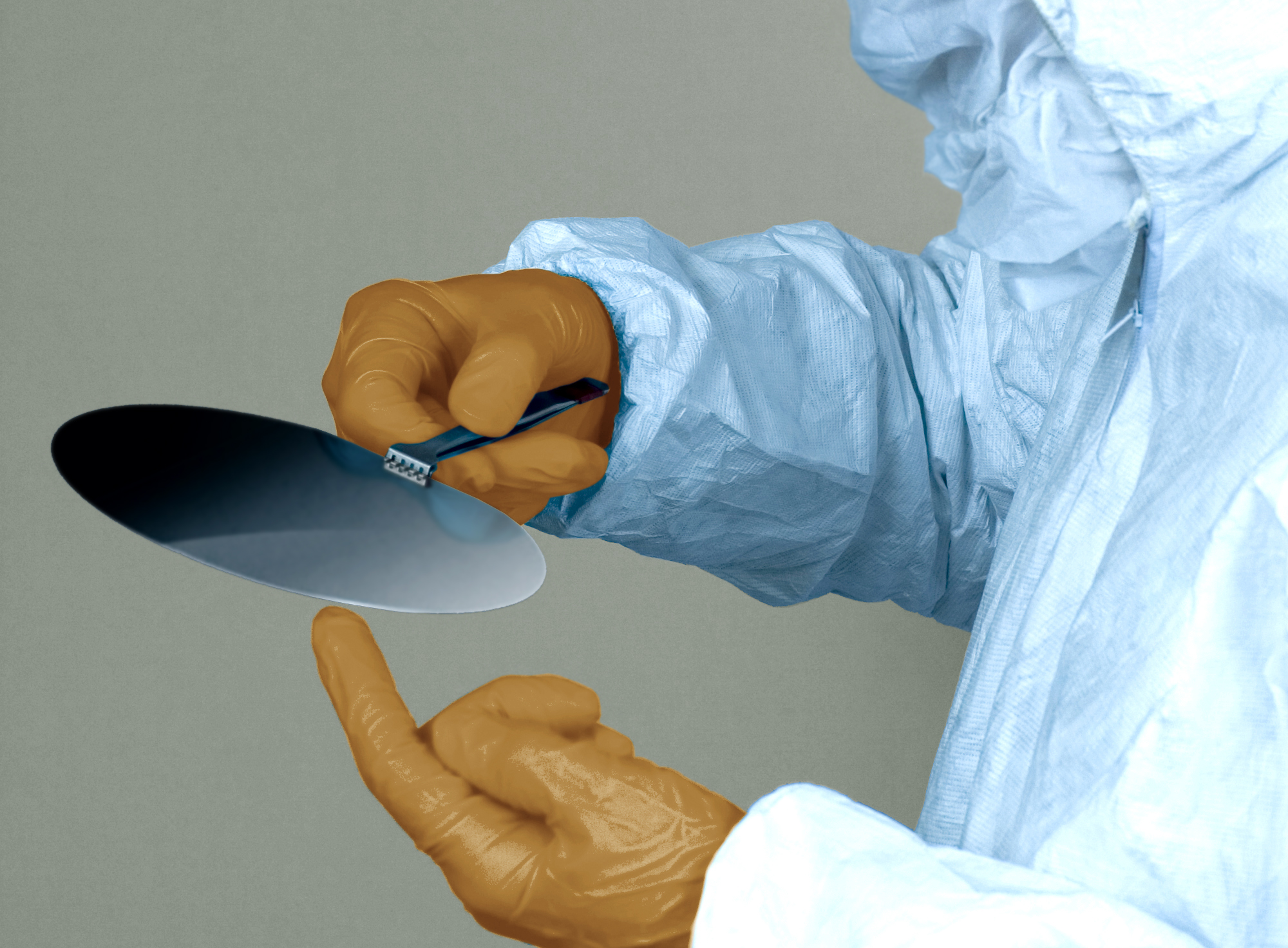
The count: 1,607 distinct peer-reviewed publications, spanning 1977 to 2026, across more than a dozen application fields, from drug-eluting medical devices to next-generation smart windows, from fuel-cell membranes to semiconductor thin films. Over a third of them were published in just the last five years.
Here’s what that record shows.
A Recent High-Profile Citation: Nature Communications, December 2025
In December 2025, researchers at Purdue University, working in collaboration with the University of Colorado Boulder and the Stanford Synchrotron Radiation Lightsource (SLAC National Accelerator Laboratory), published in Nature Communications:
“Robust fast-switching black electrochromic windows based on solution-processed n-doped transparent organic conductor” Nature Communications, vol. 17, article 575 (2026) | DOI: 10.1038/s41467-025-67271-w
The application: smart windows that switch from transparent to deep black in under two seconds, with HVAC energy savings of 15–55 MJ/m² annually across US climate zones. The enabling manufacturing step, as documented in the Methods section:
“An automated ultrasonic spray coating system (Sono-Tek, USA) with a 120 kHz ultrasonic nozzle (Impact, Sono-Tek, USA) was used to deposit scalable conductive films from ternary-solvent-based n-PBDF ink.”
The paper’s other contributors include researchers at Chung-Ang University in Seoul and support from SLAC, one of the US Department of Energy’s premier national laboratories. It is partially funded by Ambilight Inc., a commercial electrochromic windows company co-founded by the corresponding author, meaning this research is a direct bridge between academic methods development and commercial-scale production.
Nature Communications has a 5-year impact factor above 15. Peer review here means three independent reviewers with subject-matter expertise. When a result appears in this journal, it has been examined by people who know the field better than almost anyone.
Why the Methods Section Is the Most Honest Citation
A case study is something a company writes about itself. An academic methods section is written by independent researchers, peer-reviewed for accuracy and reproducibility, and published under a byline that stakes the author’s scientific reputation on the details.
When a researcher writes “we used a Sono-Tek ExactaCoat system” in a methods section, it means:
- The equipment worked. Researchers don’t name equipment that gave them bad data. Noisy, inconsistent, or unreliable results don’t get published; they get excluded from papers.
- Another lab can replicate the result. The equipment citation is a reproducibility requirement. Other teams need enough information to run the same coating process.
- The citation compounds. When Paper A describes a Sono-Tek coating process and Paper B cites Paper A as its methodological precedent, the equipment becomes embedded in the field’s standard workflow, without Sono-Tek doing anything.
What the Full Record Actually Looks Like
The momentum is recent and accelerating. 564 of the 1,607 academic papers, more than a third, appeared in 2020 or later, and the annual rate is still climbing (110 papers in 2023; 95 in 2025; 86 already logged for 2026), across Google Scholar, OpenAlex and Europe PMC.
By application field:
| Application field | Publications |
| Fuel cells & electrolyzers | 353 |
| Medical devices & pharmaceuticals | 285 |
| Aerosol science & ultrasonic atomization | 165 |
| Nanomaterials (graphene, CNTs, nanocomposites) | 133 |
| Solar cells & photovoltaics | 116 |
| Semiconductors & transparent electronics | 79 |
| Catalysis & materials chemistry | 63 |
| Sensors & biosensors | 42 |
| Batteries & energy storage | 37 |
| Food packaging & barrier coatings | 15 |
| Electrochromic / smart glass | 13 |
| Industrial & protective coatings | 11 |
| Cross-cutting / method-only | 295 |
The deepest single vein of validation runs through the most demanding electrochemistry there is, fuel-cell and electrolyzer catalyst coating, where platinum loading has to be uniform to the microgram per square centimeter. If ultrasonic spray coating holds up under that level of scrutiny (and 353 peer-reviewed papers say it does), it holds up anywhere. But the record is far broader than energy, and two of its fastest-moving areas, medical devices and semiconductors, are where the most technically demanding coating problems live today.
The Application Fields
The institutions publishing this work are not obscure. The single most frequent contributor across the corpus is the U.S. National Renewable Energy Laboratory (NREL), followed by the Technical University of Denmark and Germany’s Forschungszentrum Jülich. The record also draws on four U.S. Department of Energy national labs — Oak Ridge, Lawrence Berkeley, Argonne, and Los Alamos — plus the Paul Scherrer Institute, Purdue, RWTH Aachen, and France’s CNRS. When national laboratories independently standardize on the same coating equipment, that is validation no vendor can buy.
Medical Devices
The second-largest field in the record (285 publications), and the one where the coating problems are hardest.
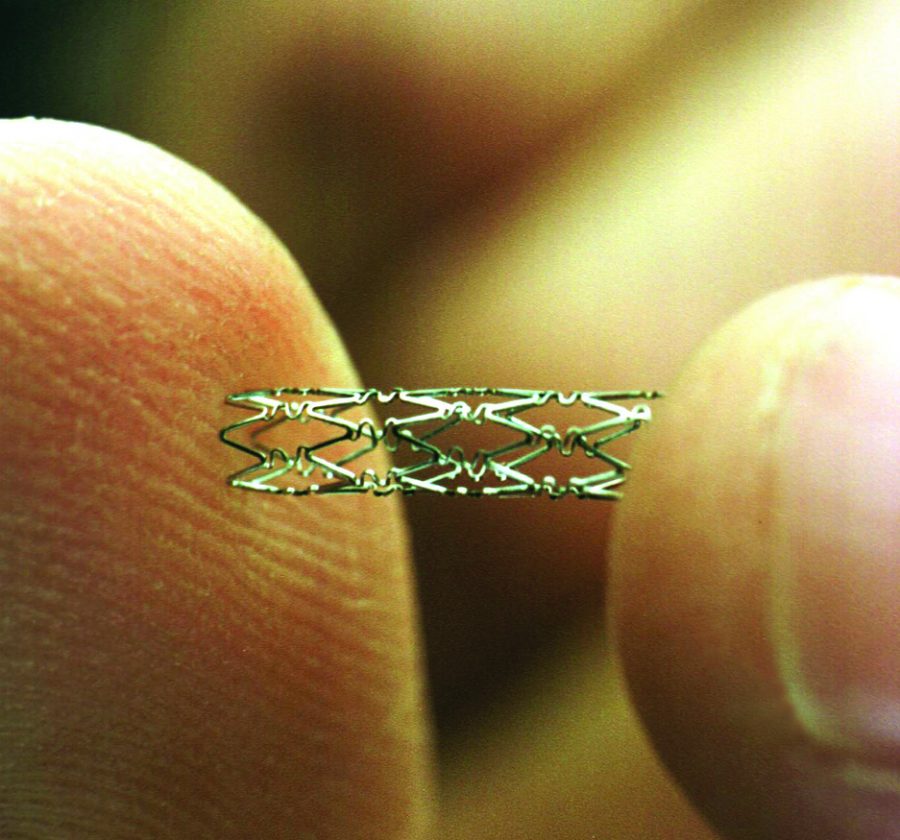
Drug-eluting stents and biliary stents. A 2019 paper in Gut and Liver (Inha University School of Medicine, South Korea) documented ultrasonic spray coating for high-visibility radiopaque tantalum markers on biliary self-expandable metal stents. Stent coating is among the most technically demanding medical coating applications — the irregular geometry of a stent means any conventional pressure spray leaves thick edges and thin centers. Ultrasonic spray, with its near-zero droplet velocity, coats the geometry without pooling.
Self-propelled drug delivery vehicles. A 2022 paper in Applied Materials Today explored pH-responsive Janus micromotors as targeted drug delivery vehicles — applying coatings via ultrasonic spray to achieve the asymmetric surface chemistry required for autonomous pH-triggered release.
The Nanyang Technological University (Singapore) produced two theses in 2011 and 2012 examining drug-eluting balloon catheters coated via Sono-Tek’s ultrasonic stent sprayer, with PLGA-based formulations and bioadhesive thin films for interventional cardiology applications.
Semiconductors and Transparent Electronics
79 publications, and a field where spray deposition is increasingly used as a high-throughput research tool. A 2023 paper in Materials Advances (Royal Society of Chemistry) from the Austrian Institute of Technology used combinatorial spray deposition to screen dozens of Cu-Ga-Fe oxide semiconductor compositions in parallel, with spray deposition as a materials-discovery methodology, not a one-off. The corpus also includes repeated work on transparent conductive oxides (indium-doped zinc oxide, gallium oxide, ITO alternatives) — the exact material class behind transparent electronics and displays.
Solar Cells and Photovoltaics
79 publications, and a field where spray deposition is increasingly used as a high-throughput research tool.
Lead-free perovskite solar cells. A 2021 paper in Solar RRL (Wiley, energy materials specialty journal) from the GREENMAT group at the University of Liège (Belgium) documented spray-coated Cs₂AgBiBr₆ double perovskite solar cells achieving high open-circuit voltage, a key efficiency metric. Lead-free perovskites are a major research priority because they remove the toxicity constraint that limits conventional perovskite commercialization.
MASnIxBr3−x perovskite thin films. A 2024 paper in the Arabian Journal for Science and Engineering examined tin-based perovskite films produced by ultrasonic spray pyrolysis, another step in the lead-free photovoltaics research track.
The Technical University of Denmark published work on Cu₂ZnSnS₄ (CZTS) thin films for large-area photovoltaics using Sono-Tek spray coating. CZTS is an earth-abundant semiconductor being developed as a replacement for rare-element thin films.
Fuel Cells and Electrolyzers
The largest field in the record (353 publications), and the deepest proof of the technique’s precision.
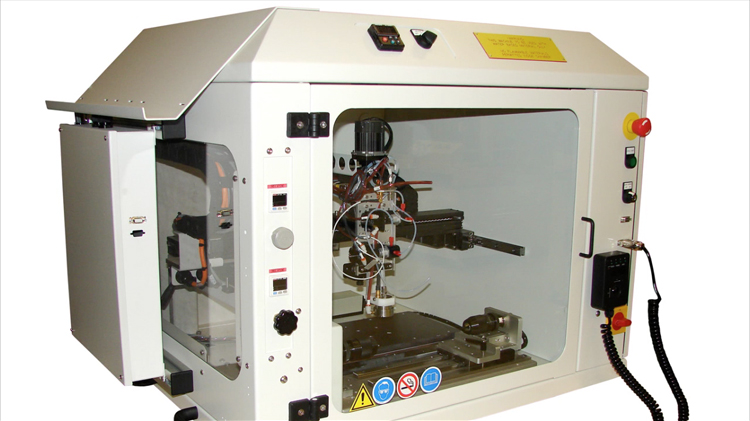
PEM fuel cell catalyst layer deposition is one of the most precision-demanding coating applications in materials science: platinum loading must be uniform across the full active area, measured in micrograms per square centimeter, because non-uniform loading creates current density variations that accelerate membrane degradation.
A 2019 paper in Catalysts, titled “The Use of Power Ultrasound for the Production of PEMFC and PEMWE Catalysts and Low-Pt Loading and High-Performing Electrodes,” directly addresses how ultrasonic processes reduce costly platinum loading while maintaining or improving performance.
A 2023 paper in Membranes from Forschungszentrum Jülich (IEK-14, Germany’s premier energy research institute, operating under the Helmholtz Association) described “self-standing, ultrasonic spray-deposited membranes for fuel cells,” applying Sono-Tek coating as the key fabrication step for free-standing ion exchange membranes.
A 2024 paper in Small from Forschungszentrum Jülich studied Ni-Fe layered double hydroxide stability in anion exchange membrane (AEM) water electrolysis under long-term operation, relevant to green hydrogen production at scale.
The EU Horizon NEWELY project (2023, published via CERN Zenodo), a multi-institution consortium targeting low-cost, non-platinum-group-metal AEM electrolyzers, uses Sono-Tek coating in its standardized MEA preparation protocol. EU Horizon projects are peer-reviewed at the funding stage and executed across multiple independent institutions. When a consortium of this type standardizes a deposition method, that represents consensus across research teams, not a single lab’s preference.
Electrochromic / Smart Windows
Beyond the Nature Communications paper above: the Transparent Conductors category of the site’s curated list includes a Purdue dissertation on scalable n-doped conjugated polymer films for transparent heating and electrode applications, the precursor research that led directly to the Nature Communications publication. The commercial development pathway from academic method to building scale smart windows runs directly through ultrasonic spray coating.
Semiconductors and Photoresist
A 2023 paper in Materials Advances (Royal Society of Chemistry) from the Austrian Institute of Technology (AIT) used combinatorial spray deposition for accelerated screening of Cu-Ga-Fe oxide semiconductors, applying ultrasonic spray as a high-throughput deposition method to screen dozens of compositions in parallel. This is the kind of application that scales: combinatorial screening by spray deposition is a methodology, not a one-off experiment.
Batteries
Across 37 published studies, ultrasonic spray coating shows up wherever batteries demand uniform coverage of three-dimensional architectures that conventional spray would flood.
A 2025 paper in Electrochem documented ultrasonic spray coating of carbon fibers for composite cathodes in structural batteries, which are embedded in structural components (airframe, chassis) and require coating of three-dimensional fiber architectures where conventional spray would pool up.
A 2025 paper in the Journal of Power Sources examined flow battery selective layer manufacturing by ultrasonic spray, documenting the process from ink formulation through component-scale production, a direct methodology paper for manufacturing scale-up.
Advanced Materials: CNTs, Graphene, Nanomaterials
Nanomaterials are the third-largest field in the record, with 133 papers.
A 2021 paper in Journal of Physics: Materials (IOP Publishing) documented graphene-coated fabrics for wearable electronics and smart textiles produced by ultrasonic spray coating. Graphene coating by conventional methods produces agglomerates; ultrasonic atomization disperses the graphene ink uniformly enough to coat fabric fibers without blocking.
Food Manufacturing and Packaging
A smaller but distinct cluster of 15 publications applies ultrasonic spray to food packaging.
A 2023 paper in Progress in Organic Coatings (Elsevier) documented ultrasonic spray deposition of PEGDE-crosslinked chitosan/graphene oxide coatings on polybutylene succinate packaging films for enhanced gas barrier properties. Food packaging coating requirements are strict, uniformity, food-contact compliance, no coating residue at film edges. The near-zero velocity of ultrasonic spray satisfies these requirements in a way pressure spray does not.
Pharmaceutical and Spray Drying
Roughly 130 of the medical papers are pharmaceutical rather than device-focused.
A 2023 paper in Drug Delivery and Translational Research (Springer) described infliximab microencapsulation for intra-articular delivery in rheumatoid arthritis, a biologic drug (infliximab, a TNF inhibitor) encapsulated by spray coating for sustained release directly into the joint space. Biologics are extremely sensitive to shear forces; ultrasonic spray atomization applies orders of magnitude less mechanical stress than pressure spray.
A 2025 paper in AAPS PharmSciTech documented the aerosolization of cannabidiol (CBD) with cyclodextrin and human serum albumin for inhalable formulations, pharmaceutical-grade particle size control for pulmonary delivery.
For Researchers: What This Record Means Practically
If you’re writing a methods section in one of these fields, you’re using equipment that reviewers in your field already recognize. You’re joining a documented research practice with 1,600+ prior entries.
The methods paper exists. The reproducibility chain exists, and you’re joining a documented research practice.
If you’re scaling from lab to pilot: the ExactaCoat system at benchtop scale and the FlexiCoat at pilot scale share the same nozzle mechanism and coating physics. What you validated in the lab scales without changing the fundamental process, which means the methods sections in your publications remain consistent as your production volume grows.
If you’re in a field that doesn’t appear in this record yet: that’s worth noting. This list is a small sampling, and the full body of literature is larger. If your application requires thin-film deposition on irregular substrates, or precise coating of fragile or temperature-sensitive materials, or process control at microgram-scale loading, the equipment exists for that application whether or not a paper in your exact sub-field has been published yet.