

Anti-Microbial Coating Machine for Medical Textiles and Bandages
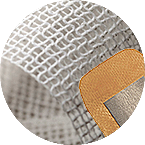
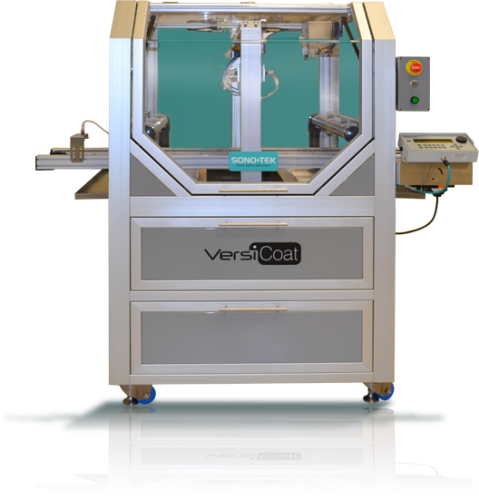
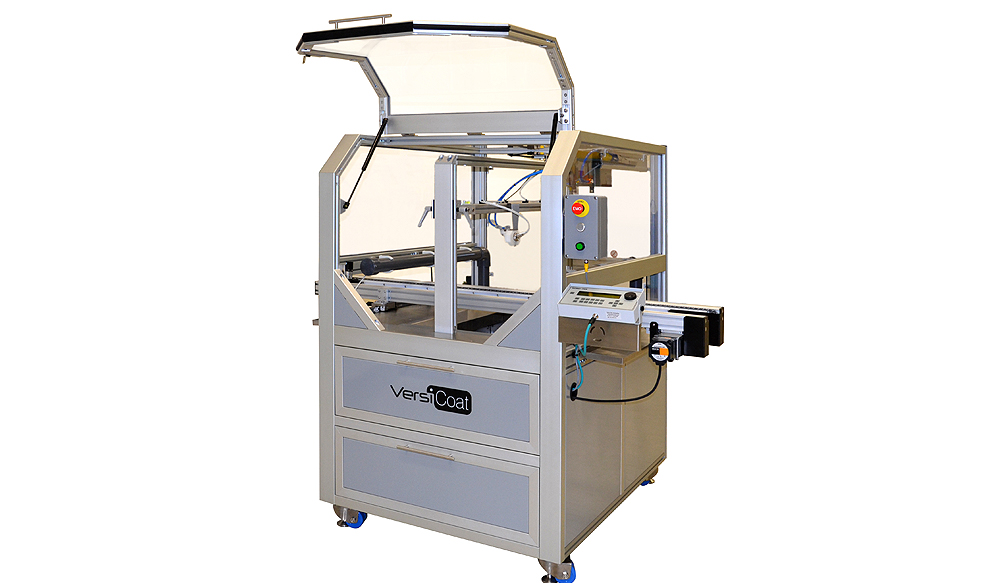
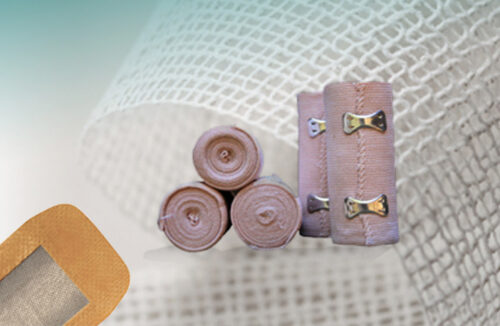 Sono-Tek ultrasonic medical coating systems provide a precise, scalable Anti-Microbial Coating Machine solution for applying uniform thin-film coatings onto medical textiles used in wound care and soft tissue repair. These systems support everything from small, selective spray areas and fine lines to wide moving webs of fabric. Ultrasonic spray is used to deposit anti-microbial coating layers and other functional agents onto medical bandages, wound dressings, surgical gauze, hemostatic patches, implantable repair mesh, and related textile-based medical devices.
Medical device manufacturers use these Bandage Coating Machine platforms to deposit antimicrobial agents and other active materials onto polymer and textile substrates. The result is uniform coverage and predictable dosing to help inhibit microbes, reduce contamination risk, and support better healing outcomes.
Medical Bandages Coating System for Therapeutic and Antimicrobial Agents
Sono-Tek systems function as a production-ready Medical Bandages Coating System capable of applying pharmaceutical and bioactive thin films with precision dosing. Coatings applied with ultrasonic spray include drug-release layers, antimicrobials/antivirals, hydrophilic or hydrophobic moisture-management coatings, clotting agents, and pain-relief/NSAID coatings.
These functional layers can help minimize pathogens at the treatment site, reduce rejection and inflammation, promote rapid healing, provide pain relief, and improve adhesion to tissue. Because ultrasonic spray produces very fine droplets with a tight distribution, it supports consistent loading of antimicrobial technology and other therapeutics across the substrate without flooding or oversaturating the textile.
Antimicrobial Coating Materials and Formulations
Ultrasonic spray is compatible with a wide range of solutions and suspensions used in medical device and bandage coatings, including solvent-based, water-based, oleic-based, and polymer-carrier formulations.
Typical coating materials include:
- Colloidal silver and silver-ion formulations
- Thrombin and other hemostatic agents
- Steroids
- Titanium dioxide
- Acetaminophen and other pain-relief agents
- Anesthetics
- Omega-3 fatty acids
- Antibacterial peptides and enzymes (including Lysostaphin)
- NSAIDs (such as ibuprofen and naproxen)
Ultrasonic antimicrobial coating technologies are often used to apply nanolayers of antimicrobial agents such as silver silane, silver nitrate, or related polymer-based formulations that inhibit microbial growth and help reduce infection risk.
Bandage Coating Machine for Wide-Web and Moving Fabric Coatings
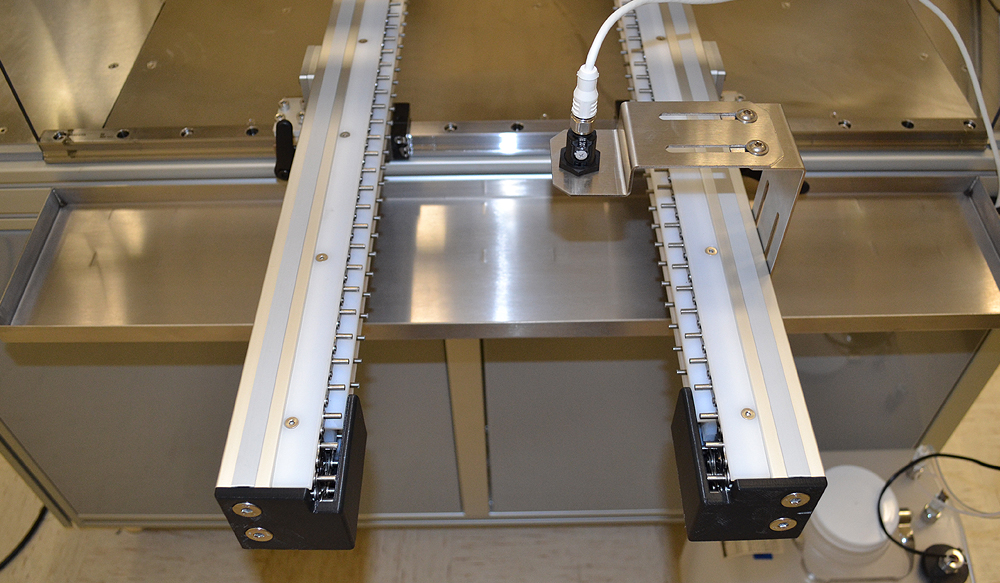
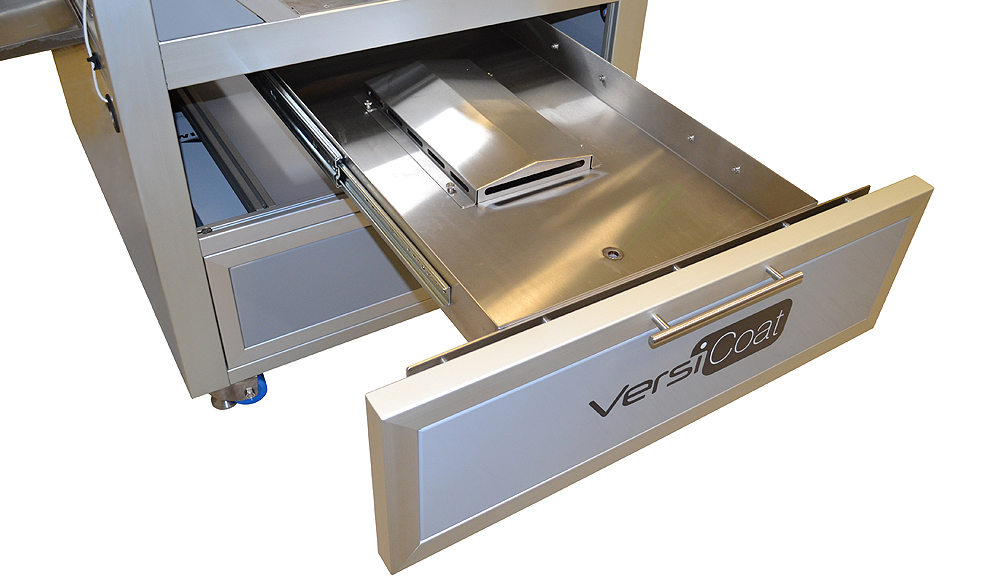
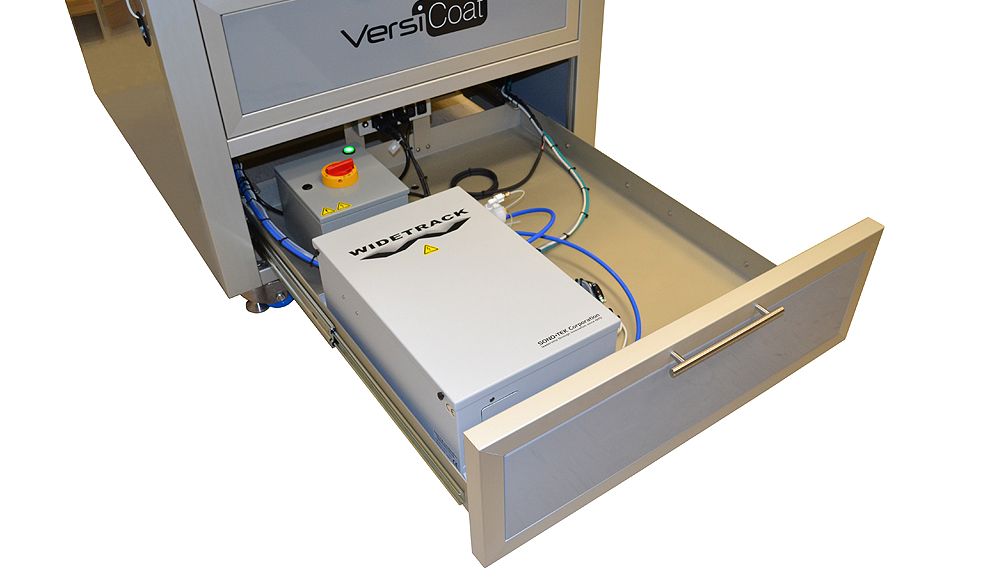
For large-area substrates and continuous textile webs, Sono-Tek WideTrack and bridge-style systems serve as flexible Bandage Coating Machine platforms. Multiple ultrasonic nozzles can be combined to coat any required width while maintaining high uniformity across the web, and systems can be configured for single- or dual-sided coatings.
Coating thickness, concentration, and coverage width are easily adjusted to balance durability, antimicrobial performance, and material efficiency. This wide-web capability supports scalable coating of wound-dressing rolls, gauze, implantable mesh products, and other medical textile devices.
Why Ultrasonic Spray Works Well for Antimicrobial Bandage Coatings
Sono-Tek ultrasonic nozzle technology produces a low-velocity, pressureless atomized spray with uniform droplet sizes (typically around 10–39 µm median droplet size depending on nozzle frequency).
The large orifice and pressureless operation make the process stable and non-clogging across a broad range of flow rates.
Key advantages for medical textile coating include:
- Precise control of coating deposition and concentration
- Tight droplet distribution for highly uniform thin films
- Small droplet size that can reduce drying or curing time
- Minimal overspray that can reduce coating material consumption
- Low maintenance with repeatable performance
- Deagglomeration of nanosuspensions during atomization
- Independent control of flow rate, spray velocity, droplet size, and deposition
- Selective area coatings or full-coverage coatings as needed
- Single- or dual-sided coating capability
Benefits of Ultrasonic Anti-Microbial Coating on Medical Textiles
- Highly uniform antimicrobial coating with precision dosing to desired areas
- Compatible with solution, suspension, solvent-, oleic-, or water-based formulations
- Fine-tuned spray control for effective drug delivery and antimicrobial performance
- Flexible width control for narrow products or wide webs
- Low-velocity spray minimizes overspray and excess material usage
- Configurable for one-side or dual-side coating, spray-up or spray-down
- Wide operating range of flow rates and coating thicknesses
Sono-Tek supports medical device manufacturers developing thin-film antimicrobial coating solutions for bandages and medical textiles, with scalable processes that move from R&D through pilot programs into production.