

Float Glass Coating Systems
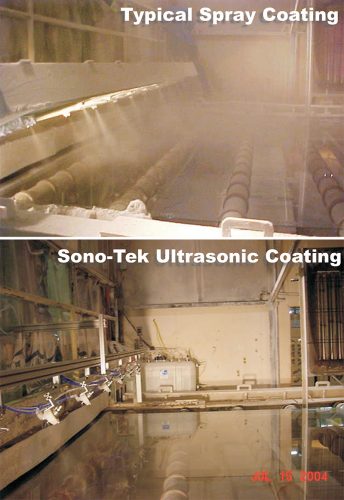
Sono-Tek Float Glass Spray System technology is purpose-built for inline float glass production. For more than two decades, float glass manufacturers worldwide have relied on Sono-Tek glass coating systems to apply thin film protective layers directly onto the moving glass ribbon. Our ultrasonic spray system delivers high-quality, uniform coatings at float glass line speeds, supporting two core float glass manufacturing needs: anti-stain onto glass and protective polymer coatings on Low-E glass.
Ultrasonic spray produces a soft, low-velocity aerosol with tight droplet size control, enabling consistent coating application across wide flat glass substrates with minimal overspray and low maintenance. These systems are well proven in continuous, 24/7 float glass manufacturing processes.
Inline Anti-Stain Onto Float Glass
Freshly produced float glass is highly reactive. During storage and transport, humidity can penetrate between stacked glass sheets and trigger surface reactions that lead to corrosion-based staining. Early stages of corrosion are often invisible, but they can later cause major rejection problems when the glass is processed into insulated glass, laminated glass, or thin film coated products.
Sono-Tek anti-stain coating systems apply a controlled, ultra-thin liquid anti-stain film onto the float glass ribbon inline. This thin film buffers the glass surface and helps prevent stain formation during storage, without interfering with downstream coating or fabrication. Published float glass studies show that liquid anti-stain protection prevents corrosion effects that otherwise degrade later thin-film coating quality, confirming the value of inline anti-stain application on float glass production lines.
Key benefits for float glass manufacturers include:
- Uniform thin film anti-stain layers across wide glass ribbon widths
- Inline spray coating at full float glass line speed
- Precise, repeatable coating dosage to match ribbon speed and glass thickness changes
- Minimal overspray and consistent coverage versus pressure spray methods
- Proven reliability for continuous float glass manufacturing
 Protective Coatings on Low-E Glass
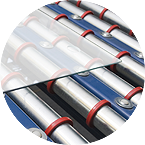
Low-E glass and other coated flat glass products often require a temporary protective polymer coating to preserve surface quality through cutting, handling, transport, insulating glass assembly, or lamination. In float glass manufacturing, this protective coating must be applied uniformly and cleanly at line speed, without dripping, streaking, or process interruptions.
Sono-Tek ultrasonic spray systems deposit protective coatings on Low-E glass inline, producing thin, uniform polymer films with controlled thickness and repeatable coverage across the full glass ribbon. The gentle, non-contact spray system avoids disturbing the glass surface while maintaining stable coating morphology and high quality on fast-moving float glass lines.
Advantages for Low-E float glass production include:
- Uniform protective coatings on Low-E glass at float glass line speeds
- Thin film coating technology with repeatable thickness control
- No dripping, no clogging, and reduced maintenance in continuous operation
- Compatible with wide glass substrates and changing glass thickness
- Inline process control for stable quality in high-volume production
Float Glass Spray System Technology for Wide Ribbon Coating
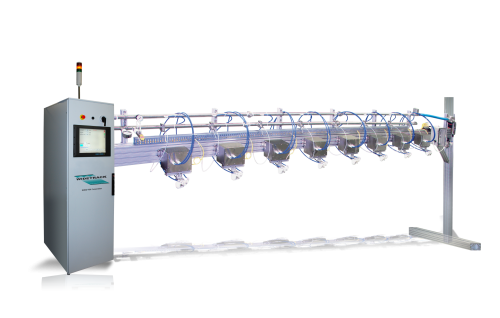
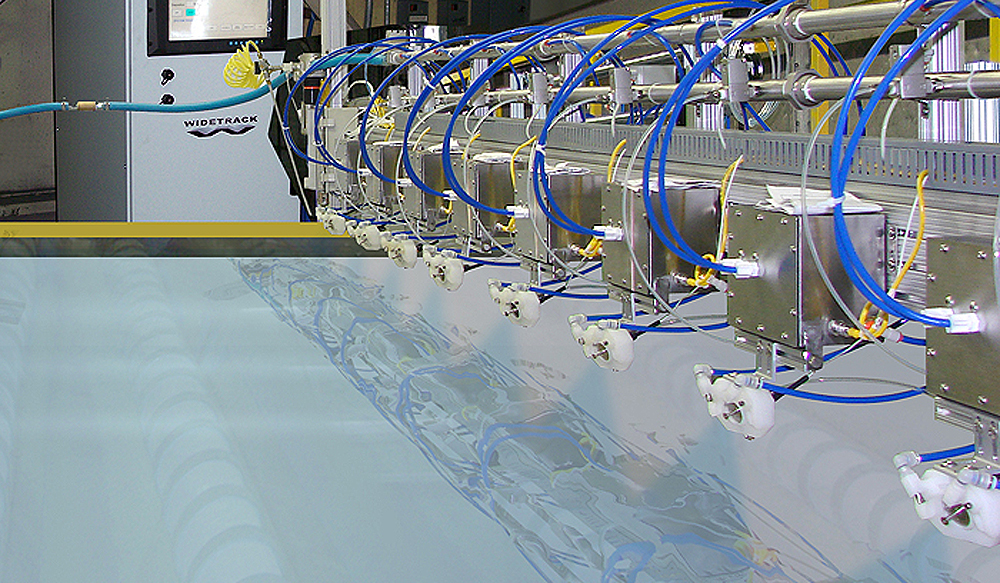
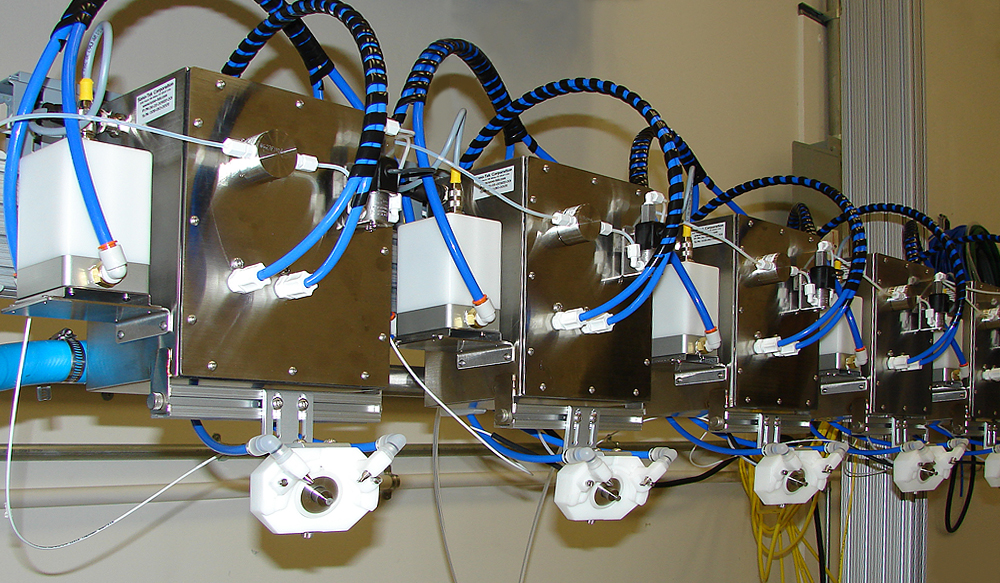
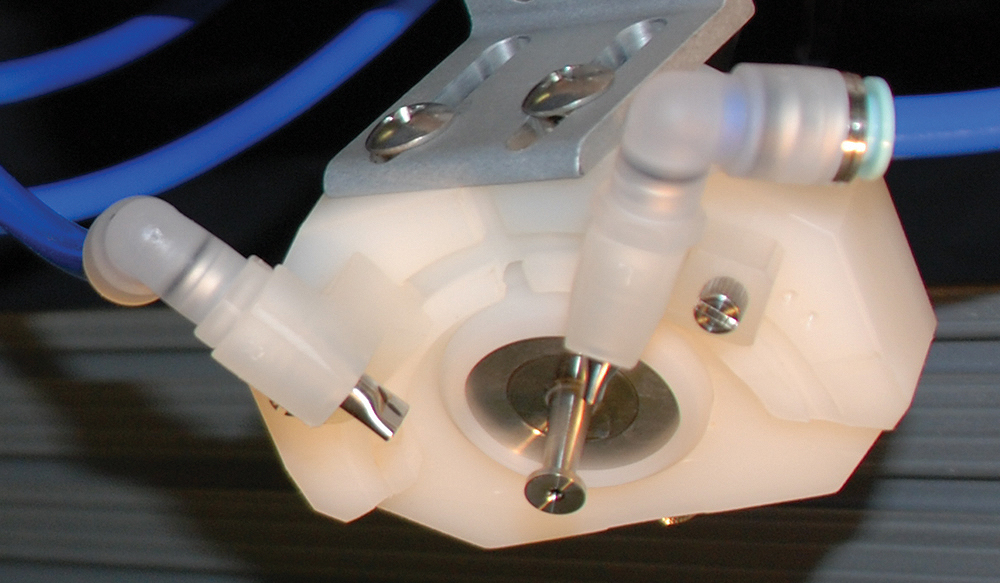
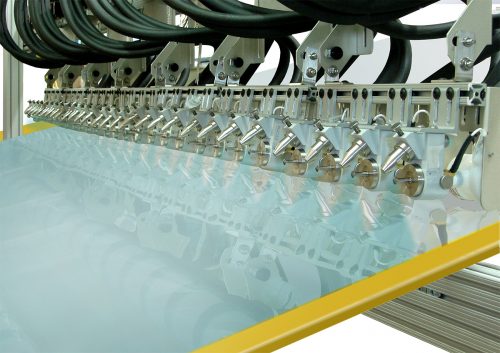
Sono-Tek Float Glass Spray System platforms are engineered to coat wide glass ribbons uniformly. Ultrasonic nozzles are arranged across the float glass line to form overlapping spray patterns from edge to edge, ensuring consistent glass coating application on flat glass substrates. The tight droplet size distribution inherent to ultrasonic spray is key to producing high-quality thin film coatings while reducing coating solution consumption compared with conventional spray systems.
Because ultrasonic spray is low-velocity and non-contact, coatings adhere smoothly to warm or hot glass surfaces without disturbing the glass ribbon, making it ideal for inline float glass production.
Designed for Float Glass Manufacturing Processes
Sono-Tek float glass coating systems are built specifically for continuous float glass production environments:
- Industrial bridges and spray heads sized for full float glass line widths
- Automated coating deposition synchronized to ribbon speed for consistent coating application
- Robust liquid delivery for anti-stain chemistries and polymer coating solutions
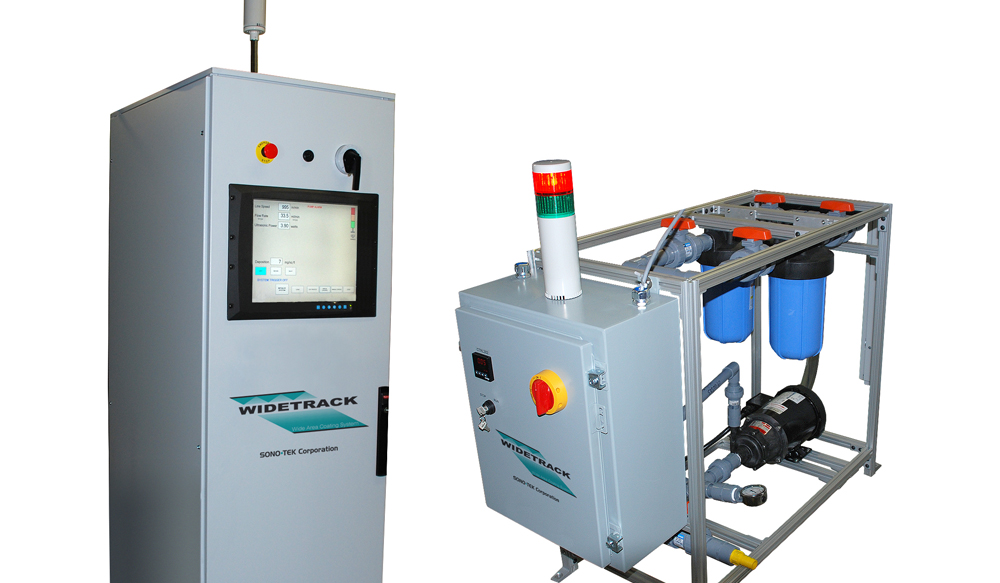
- User-friendly controls for recipe management and process monitoring
- Proven 24/7 reliability across changing float glass production conditions
These features help manufacturers maintain uniform coatings, high quality, and stable throughput on modern float glass lines.
Supporting Downstream Flat Glass Markets
Anti-stain protection preserves float glass surface quality through storage and transport, ensuring glass sheets remain production-ready for downstream laminated, insulating glass, Low-E, automotive, and architectural flat glass manufacturing processes. Protective coatings on Low-E glass enable high-throughput handling without scratching or surface damage. Sono-Tek float glass coating technology supports these value-added markets by delivering repeatable inline coatings that keep glass solutions consistent and high quality.
Talk to an Applications Engineer – Tell us about your float glass production and coating requirements. Sono-Tek will recommend the right Float Glass Spray System configuration—whether for anti-stain onto float glass, protective coatings on Low-E glass, or both—along with nozzle layout, coating process parameters, and inline control strategy to match your float glass line, glass ribbon width, glass thickness, and quality targets.