Package-Level EMI Shielding Spray Coatings with Precise Thickness Control
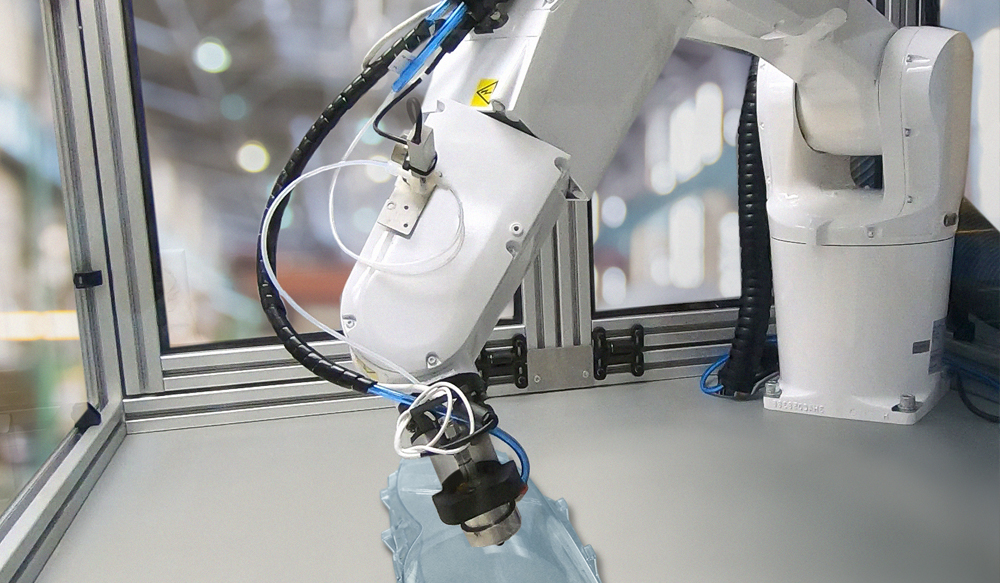
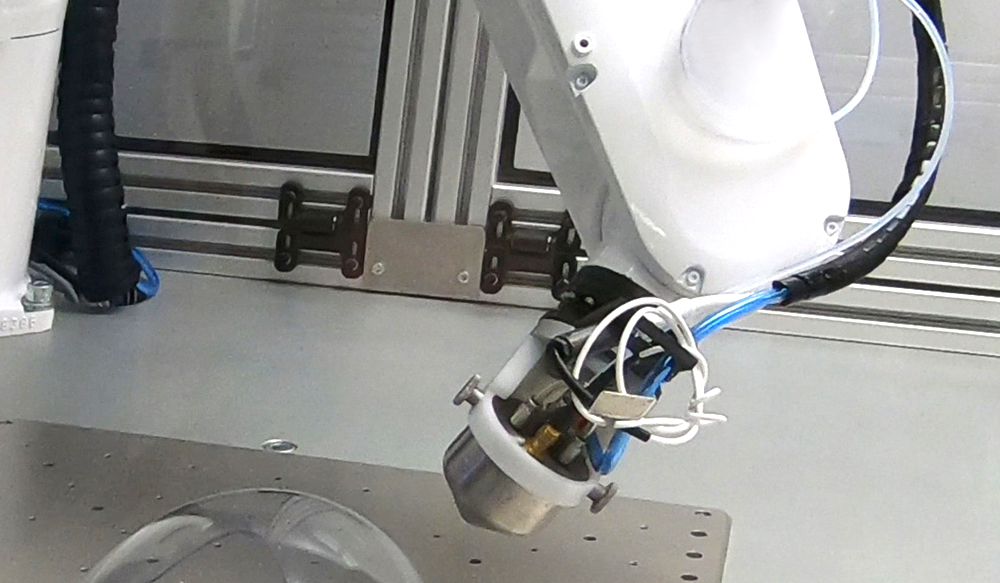
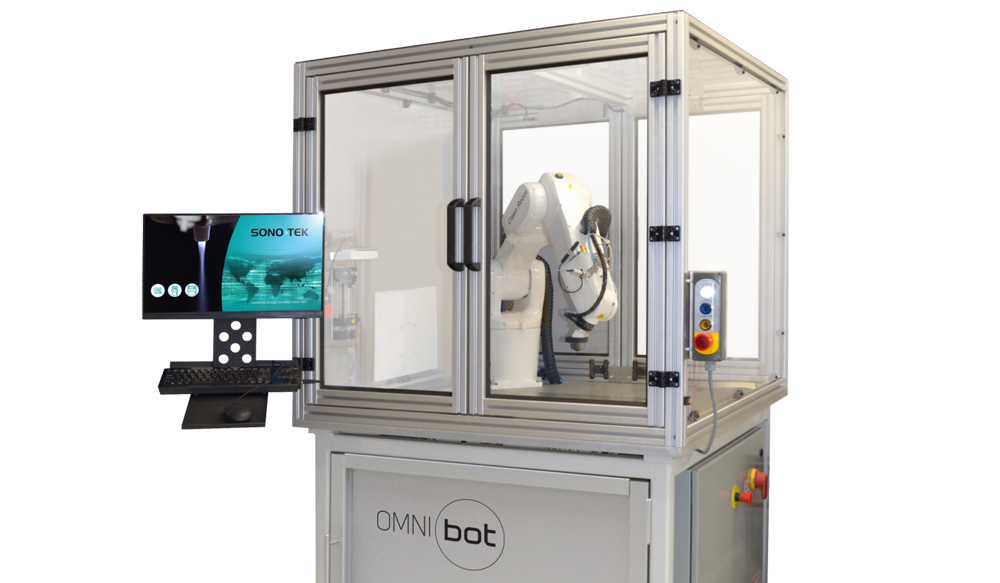
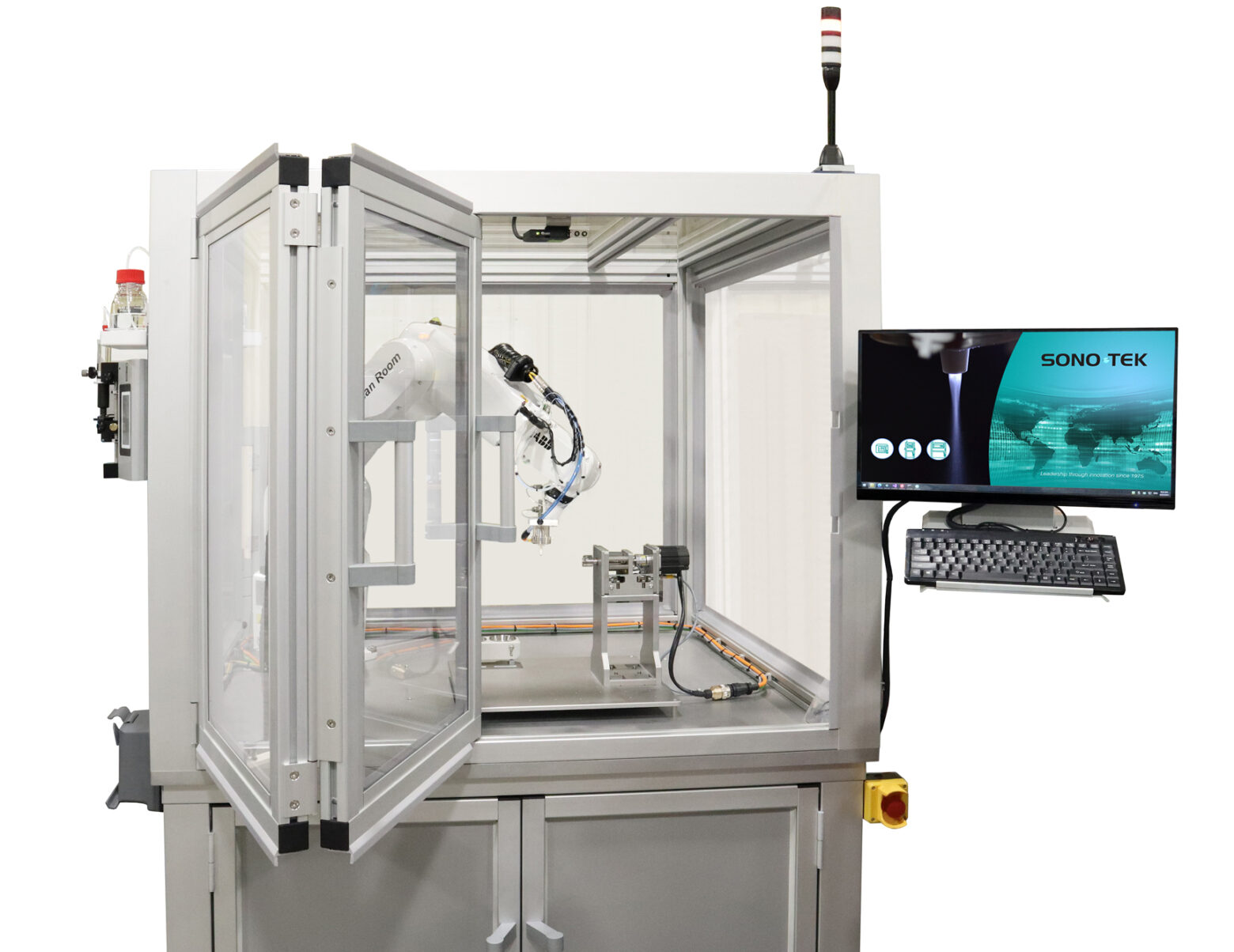
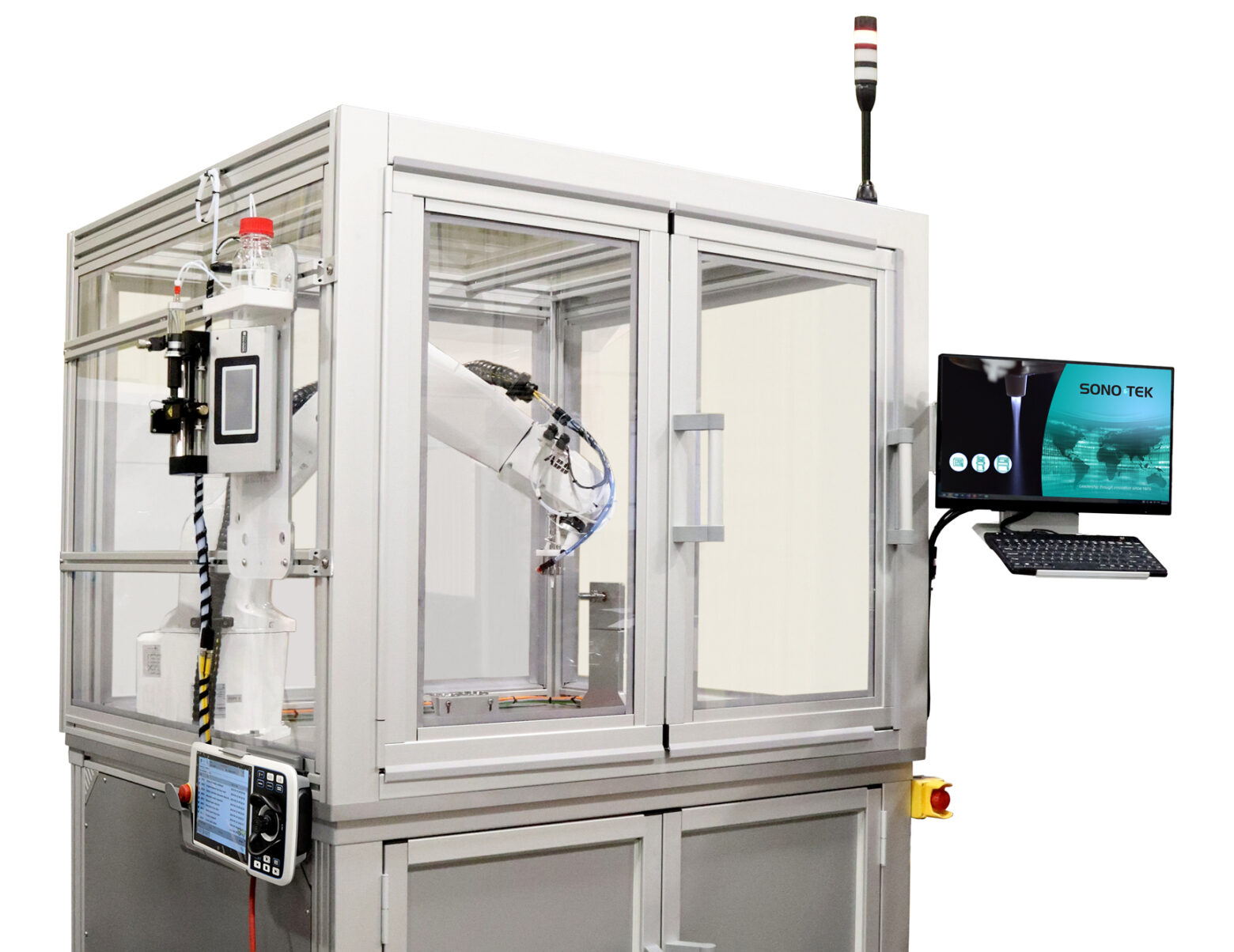
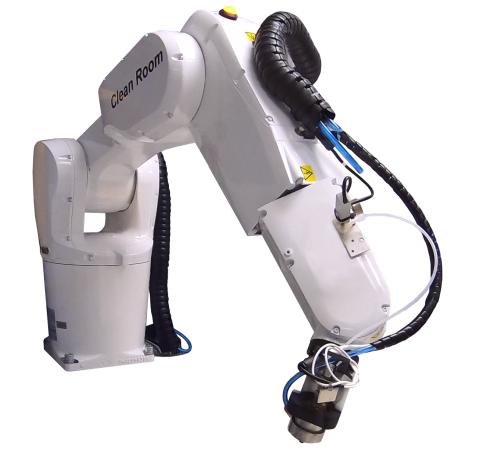
Sono-Tek ultrasonic spray platforms provide an EMI shielding coating machine solution for package-level EMI (electromagnetic interference) and RFI shielding coating processes. Ultrasonic coating technology, followed by a low-temperature heat cure when required by the EMI coating material, offers a cost-effective alternative to sputtering and other vacuum-based coating equipment commonly used today. FlexiCoat™ fully automated XYZ motion coating systems apply conductive coating solutions with controlled thin film thickness, high uniformity, and excellent sidewall coverage. Systems are available as benchtop R&D tools, pilot-line machines, and inline conveyorized coating equipment to support future high-volume manufacturing scale-up for PCB, semiconductor packaging, mobile, automotive, aerospace, and telecommunications applications.
Ultrasonic Spray Coating Technology for EMI Shielding Coatings
Sono-Tek’s non-clogging ultrasonic spray coating technology is well known for ultra-thin micron-level coatings of functional materials. For EMI shielding coatings, the ultrasonic vibration at the nozzle keeps conductive particles well dispersed in suspension and helps prevent settling or agglomeration during the coating process. This produces stable coating solutions at production-relevant flow rates and creates highly uniform thin film EMI coatings with repeatable conductivity, strong adhesion, and high durability on complex package geometries, including recessed features and sidewalls.
Conductive Spray Materials for Electromagnetic Shielding for Spray
High-performance silver-filled and other conductive epoxy or polyester EMI shielding spray materials have been used for years at the board level. As electronic devices become thinner, lighter, and more densely packaged, manufacturers are shifting from board-level shielding toward IC and package-level EMI shielding to enable higher density layouts and reduced electromagnetic interference between adjacent components. Ultrasonic spray coating is particularly well suited for these EMI coating materials because its fine, low-velocity aerosol deposits smoothly without damaging sensitive substrates, producing a continuous conductive barrier that supports predictable EMI shielding effectiveness across modern package designs.
An Emerging High-Volume Path for PCB and Package Manufacturers
Spray-applied EMI shielding is a new area under active investigation by many PCB and advanced packaging manufacturers. While sputtering and other vacuum batch methods remain the dominant production approaches today, multiple manufacturers are evaluating ultrasonic spray as a potential route to lower capital cost, faster cycle times, and inline scalability. Sono-Tek has supplied several pilot-line EMI shielding coating machines to key electronics manufacturers for process development and validation. These programs are focused on proving electromagnetic interference suppression, coating thickness control, adhesion, conductivity, and durability using ultrasonic spray, with the goal of qualifying spray as a high-volume EMI shielding process in the future.
Ultrasonic Spray vs. Sputtering, PVD, and CVD for EMI Coating Processes
Vacuum methods such as sputtering and PVD (physical vapor deposition), and in some cases CVD (chemical vapor deposition), are widely used for EMI shielding today. However, these approaches require high-capital vacuum coating systems and slow batch cycle times that limit throughput and make rapid process tuning difficult. By contrast, ultrasonic spray coating operates in open-air, non-vacuum conditions and can be integrated inline. This enables a simpler coating process with scalable area coverage, flexible deposition patterns, and a lower total cost of ownership. For manufacturers seeking a future-ready EMI shielding coating machine beyond batch vacuum constraints, ultrasonic spray is an increasingly attractive coating technology to evaluate.
Why manufacturers are investigating ultrasonic EMI shielding coating machines:
- Cost-effective alternative to vacuum batch coating equipment
- Inline spray coating potential for high-volume manufacturing
- Precise thin film thickness control for consistent conductivity
- Excellent adhesion and sidewall coverage on complex substrates
- Scalable coating systems from pilot lines to production
Talk to an Applications Engineer – Tell us about your EMI shielding, electromagnetic interference, or RFI shielding coating application. Sono-Tek will recommend the right EMI shielding coating machine configuration, ultrasonic nozzle setup, coating solution parameters, and coating process strategy to help you evaluate spray-applied EMI shielding coatings for adhesion, conductivity, thin film thickness, durability, and future high-volume production goals.